Instant Download
Your unique download link appears right after you complete your purchase, and is also sent instantly to the email address you provided.
Couldn't load pickup availability

Your unique download link appears right after you complete your purchase, and is also sent instantly to the email address you provided.
9780262043663, 9780262357487
Other Publisher
2020
English
435
41 MB
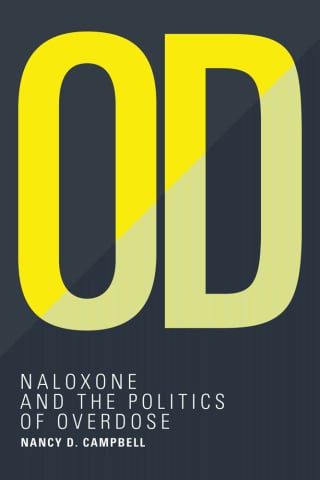
by Nancy D. Campbell The history of an unnatural disaster—drug overdose—and the emergence of naloxone as a social and technological solution. For years, drug overdose was unmentionable in polite society. OD was understood to be something that took place in dark alleys—an ugly death awaiting social deviants—neither scientifically nor clinically interesting. But over the last several years, overdose prevention has become the unlikely object of a social movement, powered by the miracle drug naloxone. In OD, Nancy Campbell charts the emergence of naloxone as a technological fix for overdose and describes the remaking of overdose into an experience recognized as common, predictable, patterned—and, above all, preventable. Naloxone, which made resuscitation, rescue, and “reversal” after an overdose possible, became a tool for shifting law, policy, clinical medicine, and science toward harm reduction. Liberated from emergency room protocols and distributed in take-home kits to non-medical professionals, it also became a tool of empowerment. After recounting the prehistory of naloxone—the early treatment of OD as a problem of poisoning, the development of nalorphine (naloxone's predecessor), the idea of “reanimatology”—Campbell describes how naloxone emerged as a tool of harm reduction. She reports on naloxone use in far-flung locations that include post-Thatcherite Britain, rural New Mexico, and cities and towns in Massachusetts. Drawing on interviews with approximately sixty advocates, drug users, former users, friends, families, witnesses, clinicians, and scientists—whom she calls the “protagonists” of her story—Campbell tells a story of saving lives amid the complex, difficult conditions of an unfolding unnatural disaster.